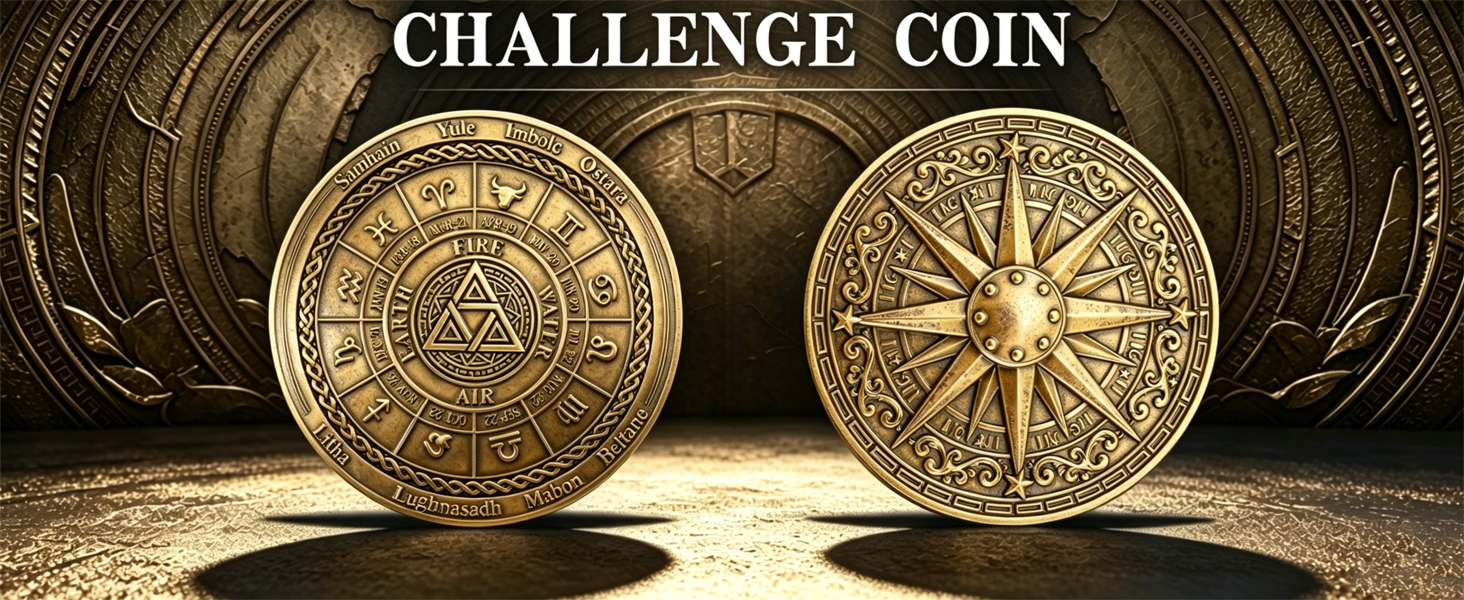
Coins That Carry Stories: Collectible Coins, Challenge Coins, and Sobriety Coins
Coins have been part of human civilization for more than 2,500 years. Most are spent, saved, or melted down. Yet a special branch of coin appreciation rests on proof that these small metal discs carry far more than market value. A coin can be a history lesson, a badge of membership, or a token of survival. Nowhere is that more visible than in the worlds of collectible coins, challenge coins, and sobriety coins. Even before you hold one, you know it holds a private meaning.
The Museum in Your Pocket: Collectible Coins
For centuries, Collectible Coins have attracted people who love stories and precision. The word “collectible” includes everything from mass-produced commemorative issues to impossible rarities like the 1933 Saint-Gaudens Double Eagle. Ancient coins connect us to rulers no textbook can resurrect; modern proof coins showcase shimmering mirror fields. Collectors delight in the smallest details — a slightly doubled die, a reeded edge, a mintmark with a hidden dot. As collections grow, they become timelines of culture.
When you buy a coin album and slide each cardboard sleeve into place, you are curating a museum you can carry anywhere. Whether investing in silver and gold or simply chasing the perfect copper penny, you soon learn that scarcity is only one part of the equation. The deeper joy is discovery.
The Brotherhood of the Pocket: Challenge Coins
No one knows exactly when military units began handing out personalized coins, but the tradition became widespread after World War I. A flying ace rescued by strangers who recognized the medallion hanging around his neck gave rise to the modern custom. Today, Challenge Coins are presented in uniforms, police squads, scout troops, and global corporations. Their obverse and reverse might carry logos, mottoes, unit mottos, or combat footprints.
These coins hold power because they exist only in small numbers. Receiving one means you were trusted, recognized, and honored. Some units practice a coin check: if a commander slams a coin onto the bar, everyone present must produce theirs. Fail, and you buy a round. Pass, and the challenger pays. A little piece of metal can therefore embody camaraderie, laughter, and loyalty. That is why a challenge coin often stays with its owner for decades — not because of what it costs, but because of what it proves: belonging.
The Quiet Pride of Sobriety Coins
Unlike collectible or challenge counterparts, Sobriety Coins generally have no monetary face value. They should not be sold on eBay or graded by a coin company. Instead, they represent one of the most difficult accomplishments a person can pursue: sustained recovery. In Alcoholics Anonymous and similar twelve-step programs, members receive plastic or bronze chips for each month, six months, one year, or longer.
A person may carry the coin in a pocket, touch it between fingers, or set it on a table during a meeting as a quiet signal: “I know how you feel; I have been there.” For many, the simple act of earning a chip becomes a ceremony of hope. Sobriety coins create milestones in a journey that has no finish line, only one-day-at-a-time victories. Each coin says, “Today I am still here.” That silent declaration is richer than any gold layer.
Why Symbolic Coins Remain Essential
We live in an era of digital wallets and contactless payment, yet people still crave physical symbols. Coins are small, dense, and durable; they slide into a palm with a reassurance that a screen cannot imitate. The worlds of collectible coins, challenge coins, and sobriety coins might seem unrelated, but they share a common logic:
- They are physical anchors for emotional and historical memories.
- They require attention and intent to be appreciated.
- They are often passed between people as gestures of trust.
When you hold a coin, you feel its weight. Weight, in turn, carries meaning. A collector can trace the footsteps of an empire in a bronze denarius. A soldier can tell the story of a deployment by pointing to a scratched rim. A person in recovery can use a token to prevent a craving from becoming a crisis. These small metal discs earn their place in pockets and hearts equally.
“Every coin has two sides — just like every life. One side tells the world where you belong; the other whispers the story you are still writing.”
At first glance, coins may seem obsolete. But from antique silver to engraved brass to a plain chip won on a clean day, they still matter. Whether you are searching for an ancient treasure, a unit symbol, or a reminder of personal strength, consider the rich narratives that wait between your thumb and forefinger. The next rare, ceremonial, or sobriety token you hold may be far more valuable than its denomination suggests. Indeed, perhaps the truest currency in the world is the one we cannot spend: tangible memory. And that is exactly what these three traditions preserve.
Comments are closed